

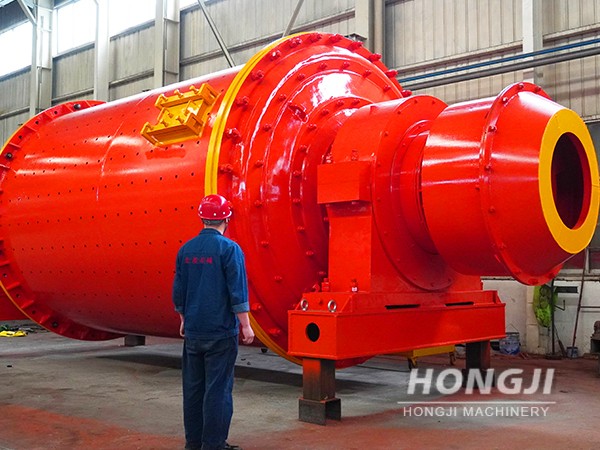
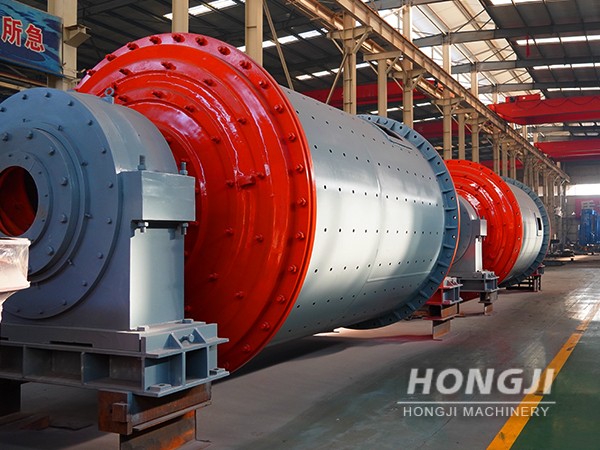

Product Introduction
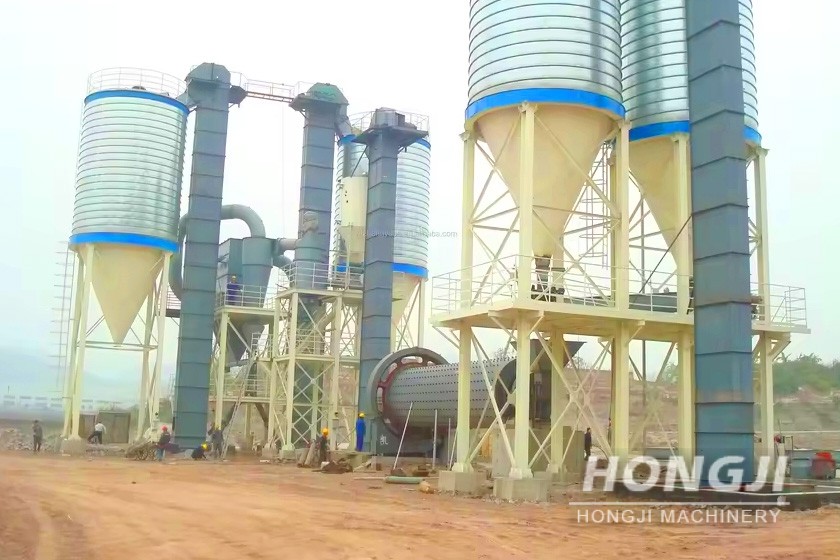
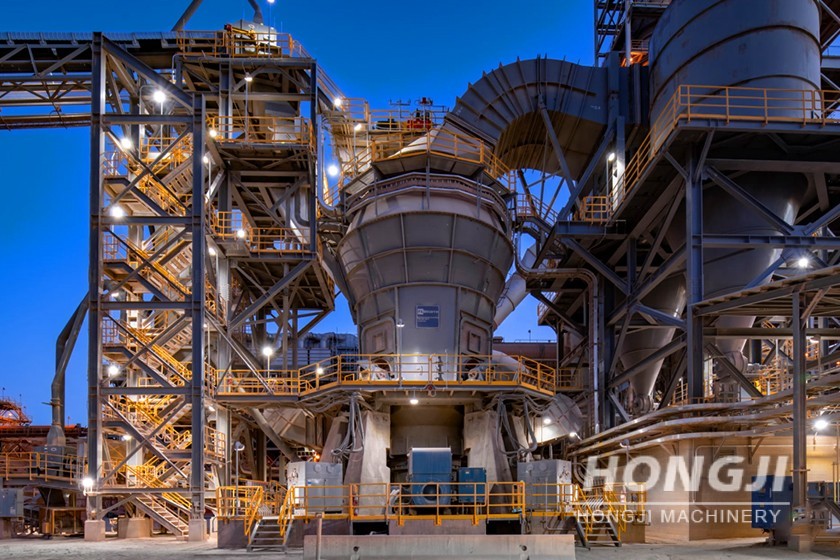
Ball mills are key equipment for further grinding materials after crushing. They are widely used in industries such as cement silicate products, new building materials, refractories, fertilizers, metal beneficiation, glass and ceramics. They can process a variety of materials, including cement clinker, gypsum, limestone, dolomite, and kaolin.
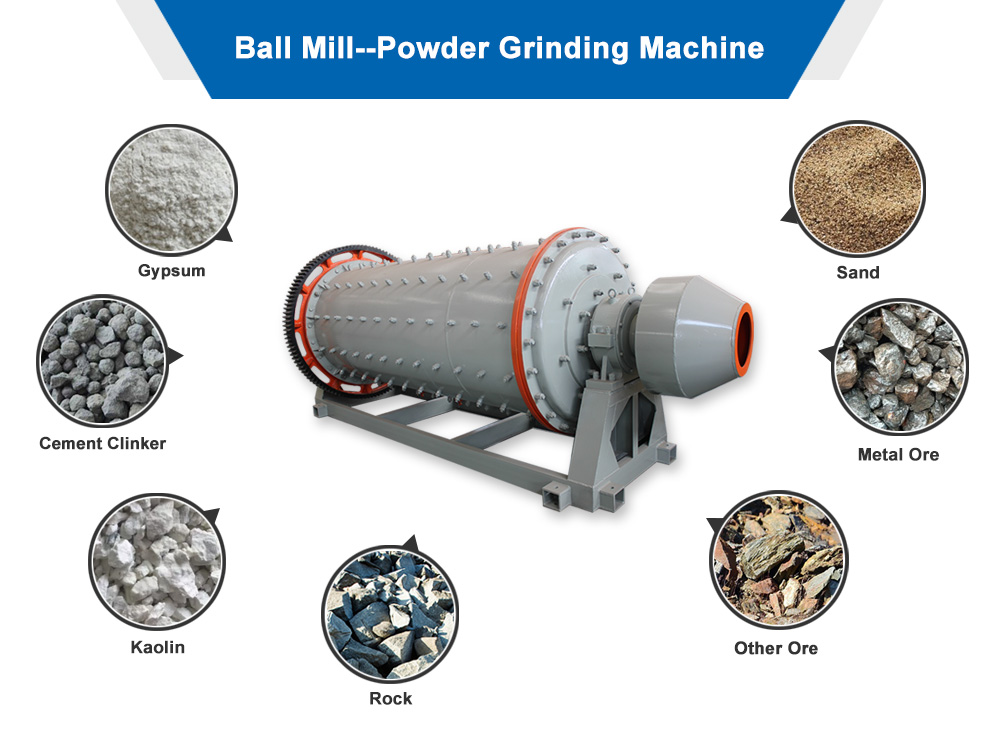
Types of ball mills
The ball mills produced by Hongji Machinery are divided into dry ball mills and wet ball mills according to the different grinding media.
▸ Dry ball mill
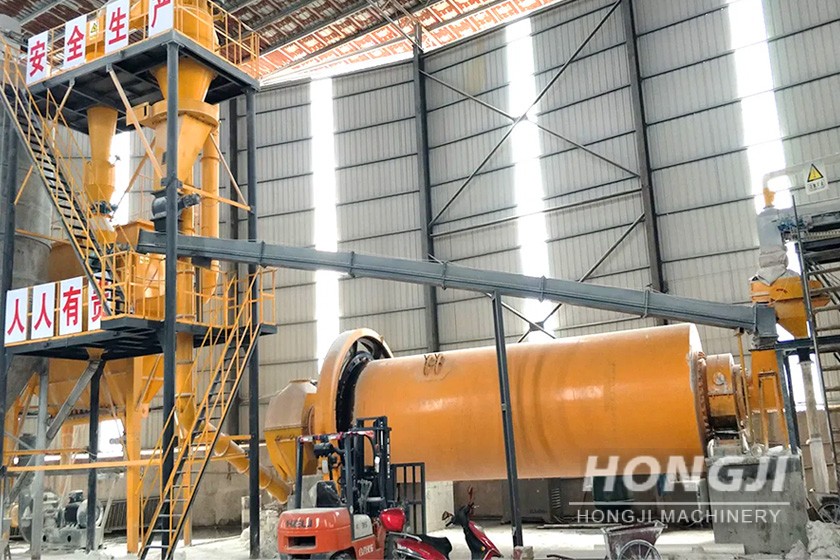
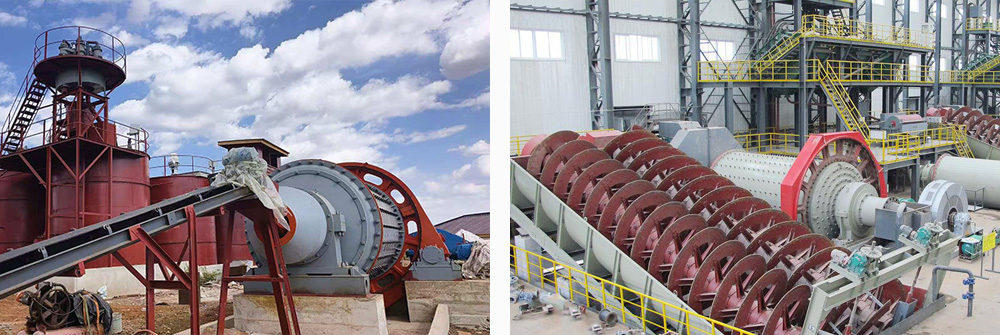
A dry ball mill is an industrial device used for dry grinding of materials to a desired particle size.The dry ball mill has the characteristics of fine and uniform product size, long service life and simple maintenance. It can be used to grind materials such as gypsum, cement clinker, limestone, feldspar, limestone, quartz sand, and dolomite.
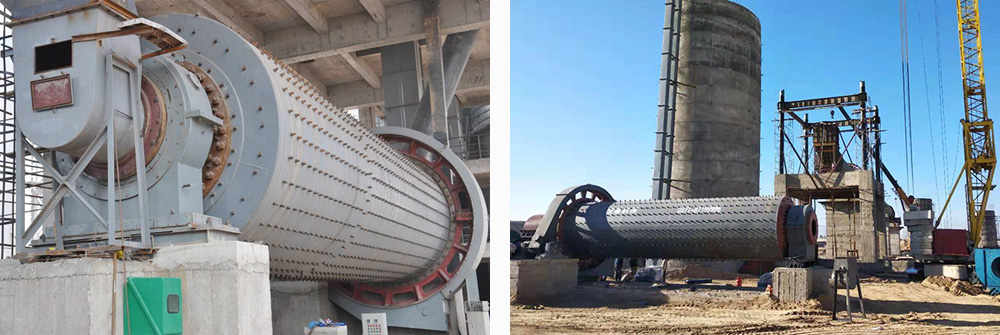
▸ Wet ball mill
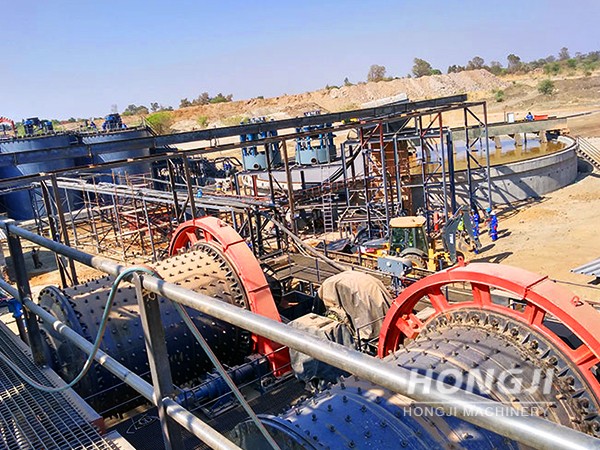
A wet ball mill is an industrial equipment used for wet grinding of materials. It is widely used in the mining, building materials, chemical and other industries, and is particularly suitable for processing materials containing water. Wet ball mills are commonly used for grinding minerals such as gold ore and copper ore.
Working principle of ball mill
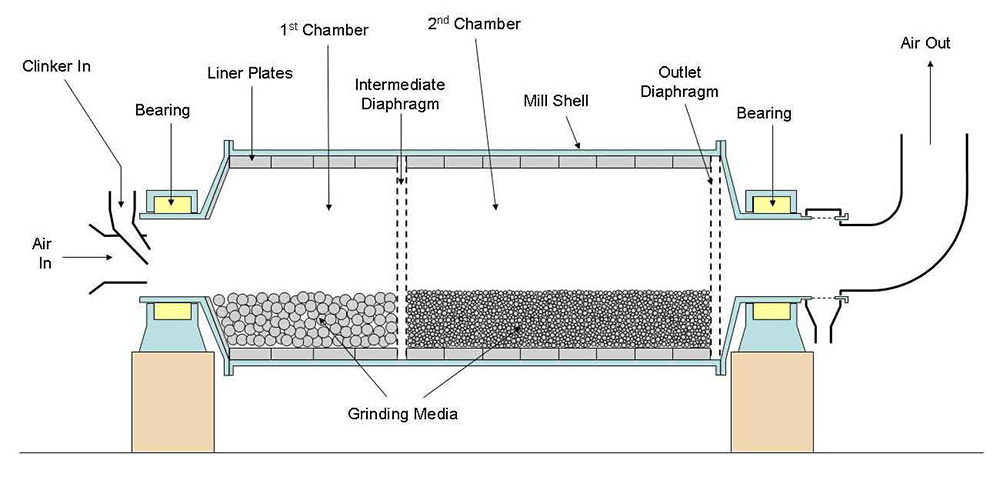
Material enters the ball mill's cylinder through the feed mechanism. Driven by the motor, the cylinder rotates, and the grinding media within are carried to a certain height by centrifugal force and friction, where they fall, impacting and crushing the material. Simultaneously, the relative sliding and rolling of the grinding media against each other and the cylinder wall grinds and compresses the material, further refining it. Once the ground material reaches a desired fineness, it is discharged through the discharge mechanism, completing the grinding process.
Features of our ball mill machine
- Low operation and maintenance cost.
- High operating reliability.
- Wide applicability and Great yield.
- Smaller built-up space in comparison with mills seated on trunnion bearings.
- Easy operation, stable& reliable performance.
- Oil mist lubrication device guarantees the lubrication of all gears.
Technical Parameter
| Model | Rotate speed (r/min) | Grinding media Weight (T) | Feed size (mm) | Discharge size (mm) | Capacity (t/h) | Motor power (KW) | Weight (T) |
| Φ900×1800 | 36 | 1.5 | ≦20 | 0.075-0.89 | 0.65-2 | 18.5 | 5.5 |
| Φ900×3000 | 38 | 2.7 | ≦20 | 0.075-0.89 | 1.1-3.5 | 22 | 6.7 |
| Φ1200×2400 | 36 | 3 | ≦25 | 0.075-0.6 | 1.5-4.8 | 30 | 12 |
| Φ1200×3000 | 36 | 3.5 | ≦25 | 0.074-0.4 | 1.6-5 | 37 | 12.8 |
| Φ1200×4500 | 36 | 5 | ≦25 | 0.074-0.4 | 11.6-5.8 | 55 | 13.8 |
| Φ1500×3000 | 32.4 | 7.5 | ≦25 | 0.074-0.4 | 2-5 | 75 | 16.8 |
| Φ1500×4500 | 29.7 | 11 | ≦25 | 0.074-0.4 | 3-6 | 110 | 21 |
| Φ1500×5700 | 27 | 12 | ≦25 | 0.074-0.4 | 3.5-6 | 130 | 25.8 |
| Φ1830×3000 | 25.4 | 11 | ≦25 | 0.074-0.4 | 4-10 | 130 | 29 |
| Φ1830×4500 | 25.4 | 15 | ≦25 | 0.074-0.4 | 4.5-12 | 155 | 35.5 |
| Φ1830×6400 | 24.1 | 21 | ≦25 | 0.074-0.4 | 6.5-15 | 210 | 43 |
| Φ1830×7000 | 24.1 | 23 | ≦25 | 0.074-0.4 | 7.5-17 | 245 | 43.8 |
| Φ2100×3000 | 23.7 | 15 | ≦25 | 0.074-0.4 | 6.5-36 | 155 | 34.8 |
| Φ2100×4500 | 23.7 | 24 | ≦25 | 0.074-0.4 | 8-43 | 245 | 42 |
| Φ2100×7000 | 23.7 | 26 | ≦25 | 0.074-0.4 | 8-48 | 280 | 56.6 |
| Φ2200×4500 | 21.5 | 27 | ≦25 | 0.074-0.4 | 9-45 | 280 | 51.8 |
| Φ2200×6500 | 21.7 | 35 | ≦25 | 0.074-0.4 | 14-26 | 380 | 60 |
| Φ2200×7000 | 21.7 | 35 | ≦25 | 0.074-0.4 | 15-28 | 380 | 62 |
| Φ2200×7500 | 21.7 | 35 | ≦25 | 0.074-0.4 | 15-30 | 380 | 64.8 |
| Φ2400×3000 | 21 | 23 | ≦25 | 0.074-0.4 | 7-50 | 245 | 58 |
| Φ2400×4500 | 21 | 30 | ≦25 | 0.074-0.4 | 8.5-60 | 320 | 69 |
| Φ2700×4000 | 20.7 | 40 | ≦25 | 0.074-0.4 | 12-80 | 380 | 94 |
| Φ2700×4500 | 20.7 | 48 | ≦25 | 0.074-0.4 | 12-90 | 480 | 102 |
| Φ3200×4500 | 18 | 65 | ≦25 | 0.074-0.4 | 25-120 | 630 | 137 |
| Φ3600×4500 | 17 | 90 | ≦25 | 0.074-0.4 | 25-140 | 850 | 158 |
| Φ3600×6000 | 17 | 110 | ≦25 | 0.074-0.4 | 25-160 | 1250 | 175 |
| Φ3600×8500 | 18 | 131 | ≦25 | 0.074-0.4 | 45.8-256 | 1800 | 252 |
| Φ4000×5000 | 16.9 | 121 | ≦25 | 0.074-0.4 | 45-208 | 1500 | 203 |
| Φ4000×6000 | 16.9 | 146 | ≦25 | 0.074-0.4 | 65-248 | 1600 | 218 |
| Φ4000×6700 | 16.9 | 149 | ≦25 | 0.074-0.4 | 45-252 | 1800 | 238 |
| Φ4500×6400 | 15.6 | 172 | ≦25 | 0.074-0.4 | 54-306 | 2000 | 280 |
| Φ5030×6400 | 14.4 | 216 | ≦25 | 0.074-0.4 | 68-386 | 2500 | 320 |
Popular Powder Milling Plants
- 10 Best Sold Mineral Grinding Plants
- Gypsum Powder Production
- Cement clinker grinding plant
- Dolomite Rock Grinding Plant
- Quartz Grinding Plant
- Limestone Powder Grinding Line
- Marble Powder Grinding line
- Kaolin Clay Grinding Process and Grinding Mills
- Bentonite Grinding Process
- Calcium Carbonate Grinding
- GGBS Grinding Unit
FAQ
How do I choose the right ball mill for my project?
Choosing the right ball mill depends on several factors, including your material type, required output size, production capacity, and whether you need dry or wet grinding. It’s recommended to provide your raw material details and capacity requirements so the supplier can suggest a customized solution.
What is the capacity range of a ball mill?
Ball mill capacity can vary widely, typically ranging from a few tons per hour to over 100 tons per hour, depending on the model, material hardness, and grinding conditions. Custom configurations are often available to meet specific production needs.
How much does a ball mill cost?
The price of a ball mill varies based on size, capacity, materials, and customization requirements. Small models may cost a few thousand dollars, while large industrial ball mills can cost tens or even hundreds of thousands of dollars. It’s best to request a quotation based on your specific project.
What is the difference between dry and wet ball milling?
Dry ball milling is suitable for materials that do not require water during processing, while wet ball milling uses water to improve grinding efficiency and reduce dust. Wet grinding is generally more efficient for finer particle sizes and is commonly used in mineral processing.
What is the lifespan of a ball mill and its wearing parts?
A ball mill itself can last 10–20 years with proper maintenance. However, wearing parts such as liners and grinding media need regular replacement, depending on usage intensity and material abrasiveness.